How a Cafeteria Composting Campaign Earned a Green Difference Award
May 18, 2026
How a Cafeteria Composting Campaign Earned a Green Difference Award
Jeana Jung entered Reedy High School thinking mostly about hanging out with her friends and passing her classes, not cafeteria trash. But joining the brand-new National Green School Society (NGSS) chapter her first year pulled her into a composting campaign that would change her school and quietly kickstart her leadership journey.
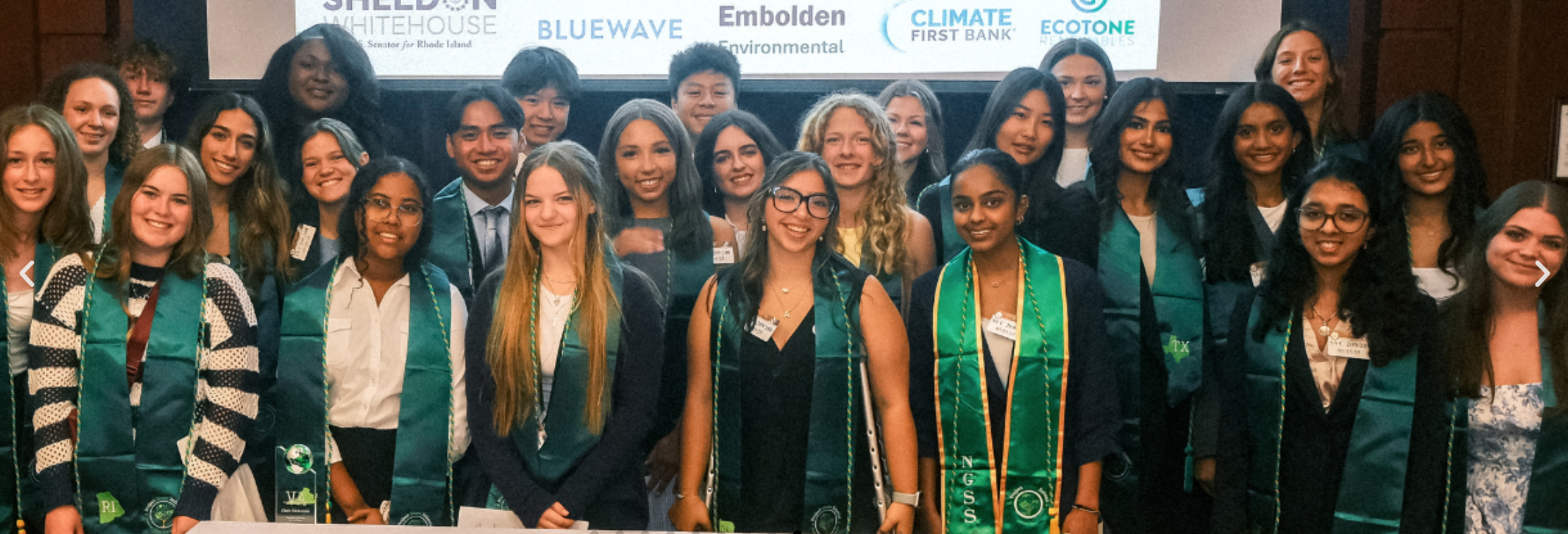
As a freshman at Reedy High School outside Dallas, Texas, she joined the brand-new chapter of the National Green School Society (NGSS), part of Project Green Schools. The club’s big idea was simple: stop treating food like trash. During her freshman and sophomore years, NGSS ran a composting campaign so effective that it won a Green Difference Award.
Jeana had already seen how compost transformed her plants at home, so helping launch cafeteria composting felt like a natural next step. During lunch, NGSS volunteers set up a table near the trash cans to sort everyone’s waste. It wasn’t glamorous work, but it mattered. Because not everyone knew how to sort correctly, the team made sure they always had enough volunteers to keep contamination low across different waste streams, from plastic cartons to food scraps. She’s quick to credit the district, too, for following through and getting those compostables to the proper facility.
In a community where the environment isn’t exactly dinner-table conversation, even sorting trash looked unusual. “Sorting trash seemed like an odd thing that not a lot of kids take the time to do,” Jeana explains. She was surprised by how many people actually cared. As students brought their trays over, they’d ask, “What are you doing with our trash? What is composting? Why are you guys doing this? What are you a part of?” Once her peers started asking questions, they wanted in.
The cafeteria layout helped. Everyone eats in the same space, so the NGSS could meet nearly 2,000 students where they were: right by the trash cans. Jeana would borrow a staff microphone and announce the “special of the day” they were collecting, like apple cores, banana peels, or cardboard. Most students didn’t know who the NGSS officers were, but it didn’t matter. It was an easy way for anyone to make a difference in about three seconds flat.
Looking ahead, Jeana hopes next year’s president can get staff and district approval to reignite the composting project. She knows exactly how powerful a student-led effort can be, because it changed her, too.
“I came into high school not really knowing how to do much,” she says. “I was 13-14 years old, freshly out of middle school. I just should have passed my classes. I don't know what's happening. But especially being involved with NGSS, that really sparked my love for leadership and for being in organizations where leadership is so important. I guess it made me realize that you can do anything you put your mind to.”
She started as the NGSS secretary and later became president, leading a chapter of more than 50 members. At first, that felt intimidating. Now she looks for leadership opportunities wherever she can find them. “It's such an important skill to have, especially in your teens, because it teaches you so much about how to work with others, how to communicate with others, and how to fight for what you believe in. Having more people makes a bigger impact. Just being able to be a leader, being able to say, ‘Hey, I have this idea. Do you guys want to come along and do it with me?’ is so important.”
Jeana credits their big membership numbers to visible wins, like the Green Difference award hanging on the wall of their sponsor, AP Environmental Science teacher Mr. Platt, and to how she talks about environmental action. “If you're sharing your experiences, people can relate to them, especially if they're a very common experience that people have,” she says. Seeing trash on the floor is one of those moments. “Especially when seeing trash on the floor, I'm like, ‘That person could have put the trash in the trash can, right?’ Then they're like, ‘Yeah, they could have put the trash in the trash can.’ So I'm like, ‘Let's put it in for them.’ It's an easy way to bring people together.” When students see each other quietly picking up trash, joining a club suddenly looks less like “being political” and more like being decent.
She didn’t always see herself as an activist. “I used to think that I didn't fit the activist mold because I'm just a student. I don't do the typical activist thing where you're really putting your voice out there or going to protests. But as a student who's just trying to get her grades and hang out with her friends, I'm realizing I actually do a lot for the environment. I try to bring people together to fight for a certain cause; I would definitely call myself an activist now. I think anyone can call themselves one if they fight for what they believe in. Anyone can use their voice to make a difference.”
For students who want to start something at their own schools, Jeana’s message is simple: start small and start anyway. She suggests inviting friends, offering service hours, asking a teacher, like an environmental science or biology teacher, for support, and using social media to share news and stats. It might begin with just three people, but that’s enough. As more students join, it becomes fun: you trade stories, learn together, and then launch bigger campaigns and projects.
“Anything starts with just yourself,” she says. “Just creating the initiative and having the passion even to start something is huge. A lot of people don't have that. Don't be scared to start because you're intimidated. People just want to see that you care and that you have the passion to start something, because a lot of students don't.”

If Jeana’s story sounds like your dream cafeteria, your friend group, or the club you wish existed, this is your cue. Launch your first project through Climate Action Lab if you’re just getting started, or take your existing team to the next level by swapping ideas with other teams nationwide to strengthen your messaging and outreach through Green Team Strategy Sessions.
Food is where our relationship with the Earth gets personal.
The choices we make create the lunchtime we experience. Are you having your ultimate lunchtime experience every day? If not yet, have you decided what problem in your school community's relationship with lunch you want to solve? Tell us about it and we'll find other schools who have a solution.
We will never sell your information, for any reason.