How 4 Components Turned One School Project into a Countywide Program
May 03, 2026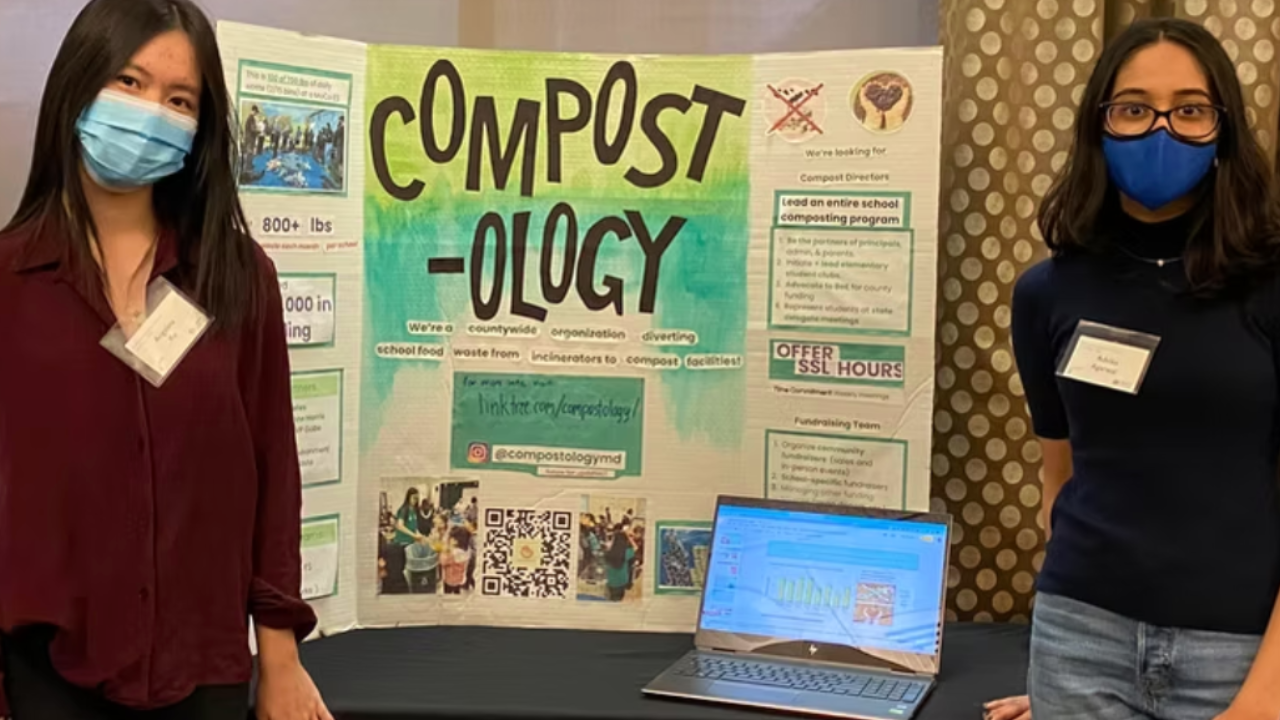
How 4 Components Turned One School Project into a Countywide Program
When you first start a cafeteria composting or food recovery project, it can feel like it’s just you, a couple of friends, and a few bins.
But as Compostology’s work spread across Montgomery County Public Schools in Maryland, President Kareena Gupta noticed a pattern. Almost everything they did fit into four main areas that kept the program going and helped it spread: education and outreach, program implementation, fundraising and grant applications, and legislation and advocacy.
You don’t have to be good at all four. The goal is to build a team where people bring different strengths, so you can cover all the pieces together.
Education and outreach are about getting classmates and younger students to understand what composting is, why it matters, and how to do it correctly. At Wayside Elementary, Compostology used morning announcements, posters, and an assembly to explain how to sort compostables and why it matters.
“This is something that you can do to save our environment, and it’s easy and impactful,” Kareena explains when she talks to elementary students.
Program implementation is about making it simple for students to do the right thing independently during a busy lunch. At Compostology schools, they use bright green bins for compost, blue for recycling, and black or gray for landfill. Color‐coding and clear signs are a big part of getting students to sort correctly.
The team also works with building administrators to ensure the system aligns with the school's existing operations. They partner with a third-party hauling company that collects food waste weekly.
Even if a project feels “cheap and student-led,” there are still real costs, mostly for hauling services. One of the biggest questions Compostology had to solve was: How do we fund this, not just now, but five years from now?
They think of it as a flow chart:
- First stop: PTA. Ask if there is any money for student-run programs. Even part of the cost helps.
- If that doesn’t work: parent community. Sometimes there’s a parent with a business who can become a corporate sponsor. The school agrees to recognize them in a weekly newsletter or PTA email, and, in return, the sponsor covers the hauling costs.
- Student-led fundraising. At one high school, a student-run club holds bake sales and applies for small mini-grants to cover its program costs.
- Grants and donors. For schools that can’t get local funding, Compostology steps in by applying for grants. They received a $48,000 World Wildlife Fund grant that supported many schools for years. As more people heard about their work, they even received a grant they hadn’t applied for. There’s also a donate button on their website.
The hope is that someday, composting will be fully funded at the county level, so student activists don’t have to keep chasing grants and sponsors.
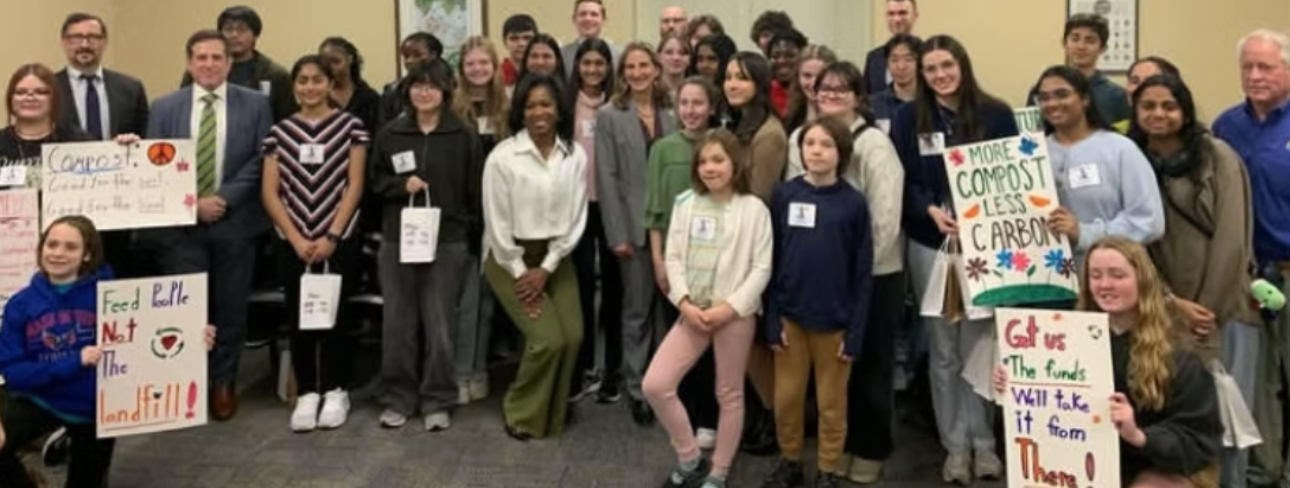
Compostology also helped advocate for Maryland’s Senate Bill 124 (2022), known as the Grant Program to Reduce and Compost School Waste. They:
- Sent students to Annapolis to testify about why composting is important
- Organized postcard campaigns where students from across the state wrote about why they care
- Delivered those postcards directly to legislators
The funds only covered the food recovery refrigerators and carts, not composting, but the experience still mattered.
Going to the statehouse helped students see that legislators are real people making decisions that affect daily life. It turned a “black box” into something they could actually understand and interact with.
Now, their county is working to build its own composting facility. The momentum is real, and advocacy helped build it.
“I think most people are inherently good people and most people want to help,” Kareena says. “This is the right thing to do, and it’s about helping people realize that.”

Each of you also carries within you inspiring stories, innovative ideas, and the invaluable experience to offer one another practical advice. You are the most effective ambassadors for encouraging more students to take an active role in environmental conservation. Why? Because you are their peers, navigating the same systems, and facing the same challenges.
How do you find peers who are passionate about each of the components? What have been your most successful fundraisers? By setting examples or highlighting strategies for overcoming challenges, you elevate other schools and contribute to a community of best practices. We invite you to Spotlight Your School at CafeteriaVictories.com.
If this sounds like the kind of change you want to lead, the Climate Action Lab at CafeteriaVictories.com is a space where students like you explore ideas and turn them into real projects. If your school already has a cafeteria sustainability program, our Green Team Strategy Sessions help you focus on cafeteria wins, troubleshoot challenges, and plan next steps with other youth leaders nationwide.
Your voice matters. Your actions make a difference. Together, we create a more sustainable present.
Cafeteria Victories supports middle and high school students as they develop their leadership in driving school wide cafeteria-waste reduction. All programs are facilitated online and open to schools nationwide through articles, coaching, and facilitated peer-mentoring.
Food is where our relationship with the Earth gets personal.
The choices we make create the lunchtime we experience. Are you having your ultimate lunchtime experience every day? If not yet, have you decided what problem in your school community's relationship with lunch you want to solve? Tell us about it and we'll find other schools who have a solution.
We will never sell your information, for any reason.