From Solo to Supported; One Compost Bin to 17 Schools
May 02, 2026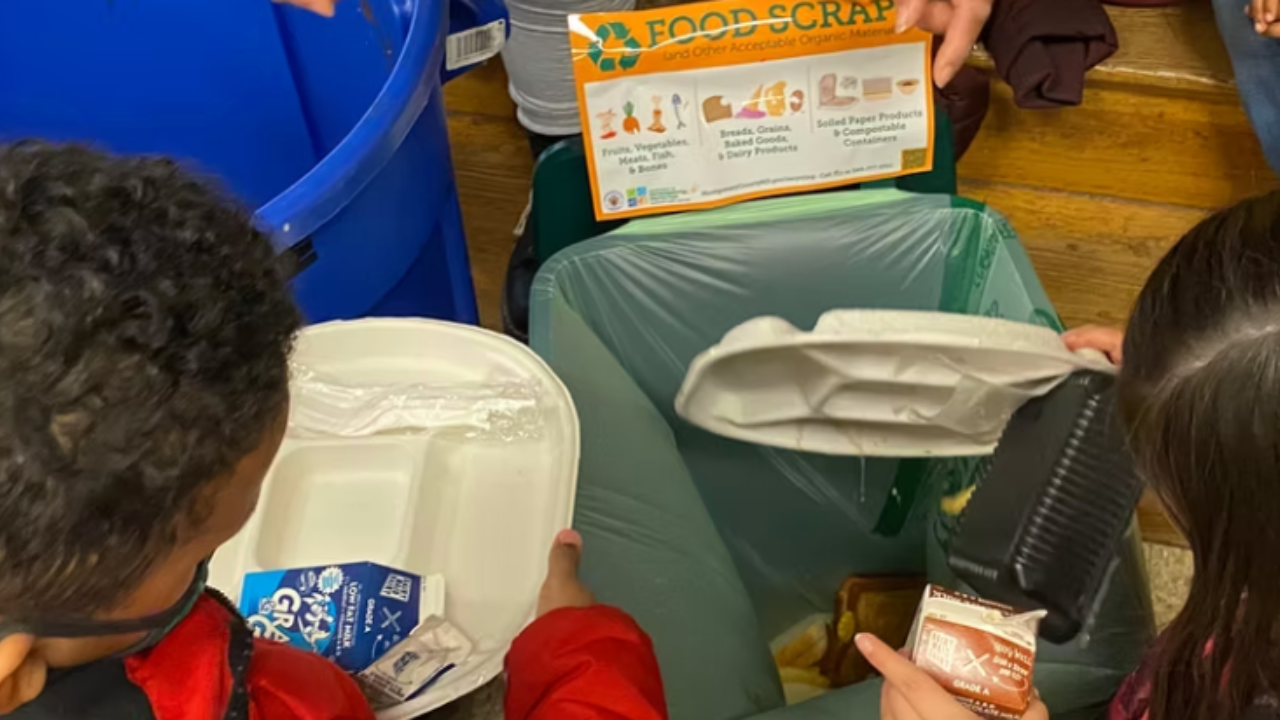
From Solo to Supported; One Compost Bin to 17 Schools
Kareena Gupta had no idea, as a seventh grader, that by the time she was graduating from high school, she would help with an effort that brought county‐funded share tables to 118 schools and composting to 17 schools in Montgomery County Public Schools (MCPS), Maryland.
During COVID, she spent a lot of time outside. Being in nature made her want to conserve it. With extra time on her hands, she started researching how to get involved in environmental protection. She decided to start with something she thought would be “cheap, easy, feasible, and student-led”: composting at her school, Herbert Hoover Middle.
It did not turn out to be easy.
It took almost her entire eighth‐grade year to get her principal on board. She had to answer question after question and repeatedly research each concern before her principal finally agreed to a short pilot in May.
On the second day of that pilot, while Kareena stepped away to eat her own lunch, a group of students deliberately contaminated the compost bins by throwing in water bottles.
“It was really discouraging,” she remembers.
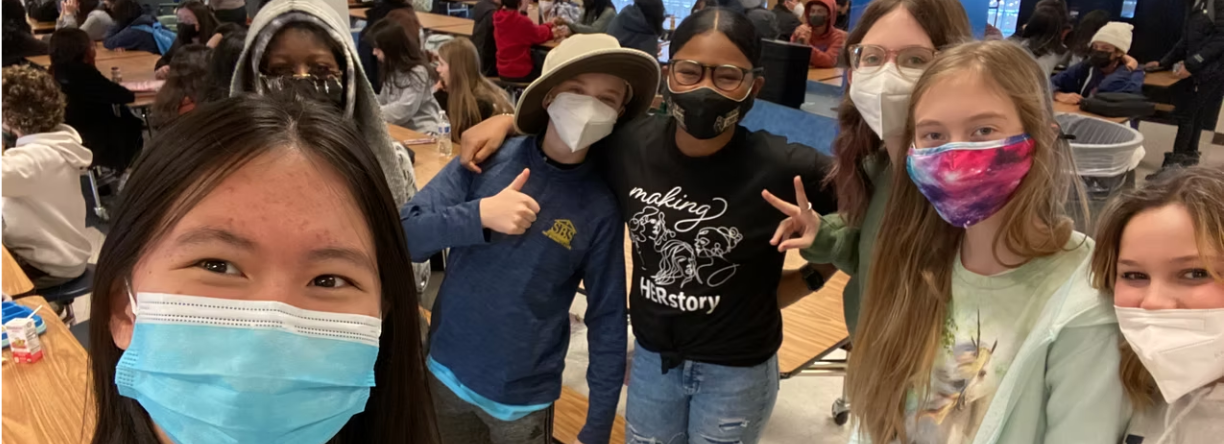
But something happened that changed how she saw leadership. Other students came to help her remove the water bottles and stood with her on the third day. Kareena realized that creating change in a cafeteria, or anywhere with many moving parts, can’t be done alone.
“A lot of it is about your own persistence and grit,” she says. “There are a lot of parts of the process where it’s easy to become discouraged. That’s why it’s important to have a good support system.”
She also learned that you never really know who you’re reaching. Months later, she found out that one of the students who had helped lead the contamination started composting at home.
“You never know who you’re going to inspire and when,” Kareena says with a smile.
Building a support system and real leadership skills
Kareena is honest about how hard it is to change a system with significant inertia.
“It takes some amount of effort to get people to change, even if your idea is the greatest idea ever,” she says.
For her, a milestone was finding people who cared about the same issues and were willing to stick with it. She joined Compostology, a youth‐led 501(c)(3) nonprofit making food waste the next big frontier for environmental action, education, and legislation. Working with other students across schools gave her a support network and pushed her out of her comfort zone. Compostology also works with John Meyer, the Recycling & Waste Reduction Manager, who heads the food recovery program in MCPS. It’s important to align student-led action with existing systems.
Kareena used to be really shy. Over time, cafeteria sustainability became a training ground for skills she didn’t expect: researching, comparing prices, collaborating, communicating, public speaking and teaching, organization, problem-solving, resilience, confidence, and even learning how to read a contract.
“Being able to create change before you’ve done it seems like a very far‐out concept,” she says. “There’s a gap between caring about something and taking action to do something about it. That’s why I think having a support system is really important, but also just recognizing that you have the power to do something.”
Kareena’s encouragement to you
Kareena believes that younger students often have more power than they think.
“Honestly, I feel like people listen to younger kids more than to adults,” she says. “Because that’s not something they see a lot. When they see a student, they know your intentions are more pure and genuine.”

Each of you also carries within you inspiring stories, innovative ideas, and the invaluable experience to offer one another practical advice. You are the most effective ambassadors for encouraging more students to take an active role in environmental conservation. Why? Because you are their peers, navigating the same systems, and facing the same challenges.
How do you connect with other like-minded schools? What professional or leadership skills have helped your team achieve your proudest results? By setting examples or highlighting strategies for overcoming challenges, you elevate other school green teams and contribute to a community of best practices. We invite you to Spotlight Your School here at CafeteriaVictories.com.
If this sounds like the kind of change you want to lead, the Climate Action Lab at CafeteriaVictories.com is a space where students like you explore ideas and turn them into real projects. If your school already has a cafeteria sustainability program, our Green Team Strategy Sessions help you focus on cafeteria wins, troubleshoot challenges, and plan next steps with other youth leaders nationwide.
Your voice matters. Your actions make a difference. Together, we create a more sustainable present.
Cafeteria Victories supports middle and high school students as they develop their leadership in driving school wide cafeteria-waste reduction. All programs are facilitated online and open to schools nationwide through articles, coaching, and facilitated peer-mentoring.
Food is where our relationship with the Earth gets personal.
The choices we make create the lunchtime we experience. Are you having your ultimate lunchtime experience every day? If not yet, have you decided what problem in your school community's relationship with lunch you want to solve? Tell us about it and we'll find other schools who have a solution.
We will never sell your information, for any reason.