
Ashley’s Path To Student Board Member
Jul 15, 2026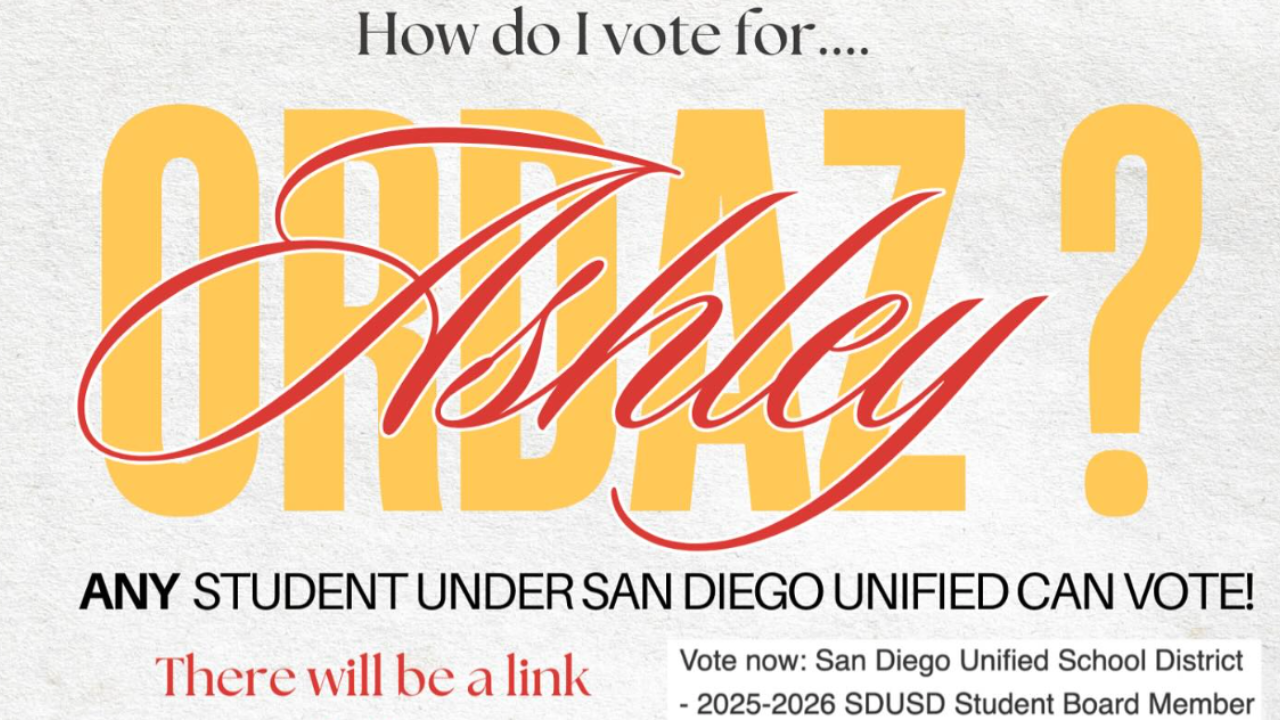
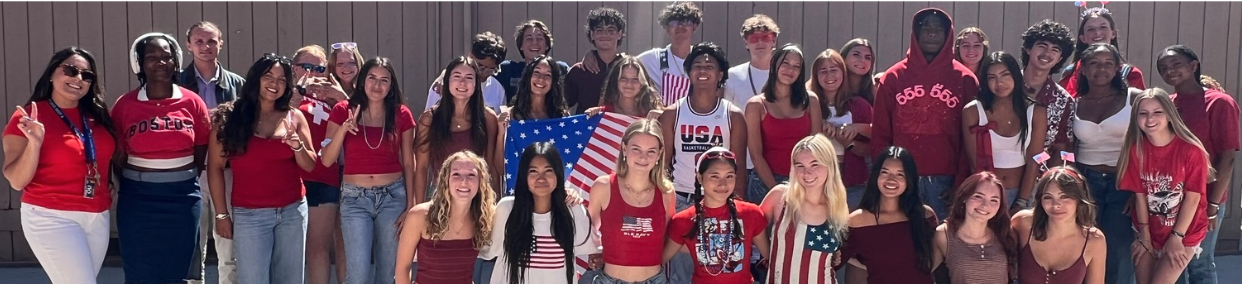
In Ashley Ordaz’s freshman year at University City High School, she learned that the first-ever student board member in San Diego Unified previously attended her new school. That seed sat quietly in the back of her mind until spring of her sophomore year.
By then, Ashley was that Associate Student Body student who kept asking, “What’s negative at our school? Who is it impacting the most? And how can it be fixed?” She was already in clubs that served the community and took classes about issues in society. When a friend in the district office mentioned the student board member role again, she finally went to the San Diego Unified website to find out more about what the position is, how to qualify, and what the process looks like.
Getting 200 signatures (in one day) and campaigning
Part of the application was getting 200 student signatures. It only took a day visiting classes, lunchtime, and even a soccer game to get every name. Two weeks earlier she’d just run for an ASB executive spot, so when she showed up again, people already recognized her.
Then came campaigning, which Ashley genuinely enjoyed. Social media was her “biggest friend.” She made colorful, music-backed posts showing her real life in high school: football games, other events, and the energy she wanted to bring to the district.
For Ashley, it wasn’t enough to say, “Okay, I’m gonna make this district better.” In her speeches and posts, she focused on “how she was going to make this district better and what is the most important?” That’s the part she made sure to include whenever she was talking about why she was running.
She didn’t stop with her own school. Ashley also campaigned across other high schools because she didn’t want to be just a name on a ballot. She wanted students to recognize her as “a familiar face,” not some faraway person in power they’d only see once. She would talk to a few friends from different schools, get their principal’s permission, and then her flyers would be printed and posted.
She also talked to her friends in person ahead of time to ask them to repost her social media content. Her thinking was simple: if the position requires votes from across the district, more students need to at least see her once. For anyone running now, she encourages you to reach out to your ASB and ask teachers and staff to help spread the word.
Listening before leading
Before she was ever sworn in, Ashley was already acting like someone who represented the whole district, not just herself.
She didn’t think it was enough to focus on the problems she personally had experienced in middle and high school. She reached out to friends from her old middle school who now attended different campuses and asked, “What is something that you want to see more of?” At her own school, she went to programs she wasn’t part of, like ROTC, band, and the biomed pathway, because she knew those students probably had different experiences than she did.
Ashley also studied the history of the role. She read about previous student board members and stayed in contact with them. She remembers calling them whenever she felt stuck, because “they did the same thing that I did. They were in the exact same position.” That support from former student board members is part of what helped her see the role as something possible, not unreachable.
Using the role for sustainability
Once she became a student board member, Ashley’s interests in politics, government, and the environment started to overlap. She began working with nutrition services, collecting data on how much food was actually being consumed and paying attention to composting and food waste. She also learned how the district looks at “the majority of students” and the “common issue” when decisions are made.
That’s where cafeteria sustainability comes in, and how student leaders can frame it as a real, district-wide issue. (That part of her story has its own article.)
Your next move if you want a seat like this
Ashley talks a lot about how much power students actually have: “You can literally do absolutely anything, especially in a school district… what the district does is serve you.” For her, the education system is “the beginning of your platform,” because everything from learning to getting a job starts there.
If you’re already thinking about becoming a student board member, your next step doesn’t have to be huge. Start the way Ashley did: by listening and building connections.
- Reach out to sustainability-minded clubs at middle and high schools across your district or nationwide.
- Ask what they’re seeing in their cafeterias and what they want to see more of.
- Stay in touch with them, so when you do land a position like this, you already know who you’re representing and whose voices you want at the table.
That way, by the time you’re sitting in a board seat, you’re not just there for yourself. You’re already backed by a network of students who care about the same changes you do.
Food is where our relationship with the Earth gets personal.
The choices we make create the lunchtime we experience. Are you having your ultimate lunchtime experience every day? If not yet, have you decided what problem in your school community's relationship with lunch you want to solve? Tell us about it and we'll find other schools who have a solution.
We will never sell your information, for any reason.